Supplier Diversification Thailand: a Manufacturing Alternative for OEMs
Explore how OEMs and industrial companies can evaluate Thailand as a second manufacturing source for cable harnesses, PCB assembly, RFID products, molding, and industrial assemblies.
Supplier Diversification: Thailand for OEM Manufacturing
Many OEMs and industrial companies are reviewing their supply chains and evaluating alternative manufacturing locations outside their existing supplier base. The goal is not always to replace a current supplier completely. In many cases, companies want to reduce dependency, build a second qualified source, and improve resilience in critical production areas.
For companies in Germany, Europe, the United States, and Australia, Thailand can be a practical manufacturing alternative for cable harness manufacturing, PCB assembly, RFID products, molded components, and industrial assemblies.
Why Supplier Diversification Matters
Supplier diversification is not only about cost. For many industrial buyers, it is about reducing operational risk.
A company may already have a functioning supplier, but still face challenges such as inconsistent quality, delayed deliveries, limited communication, weak documentation, or a lack of process transparency. In these situations, relying on one supplier or one production location can become a business risk.
Building a second qualified manufacturing source gives procurement, engineering, and operations teams more flexibility. It can also create a safer path for future production transfers, cost reviews, or long-term capacity planning.
Supplier Diversification Does Not Always Mean Full Relocation
Supplier diversification does not mean that every company must immediately move production away from its existing supplier.
In many cases, the smarter first step is a controlled evaluation. This may include an RFQ review, a technical discussion, sample production, or a pilot batch. The objective is to understand whether a second manufacturing partner can meet the required quality, volume, documentation, and delivery expectations.
For OEMs, this approach reduces risk. It allows the buyer to compare manufacturing capabilities before making a larger production decision.
Why Thailand Can Be a Practical Manufacturing Alternative
Thailand has become an established industrial manufacturing location in Southeast Asia, especially in areas connected to automotive, electronics, electrical products, and industrial production.
For international buyers, Thailand can offer an attractive balance between manufacturing cost, export experience, industrial infrastructure, and access to skilled production teams. This makes it relevant for companies that want to diversify their supply chain without moving into an untested or overly complex environment.
Thailand can be particularly interesting for OEMs that require reliable execution, recurring production, structured quality control, and clear communication with an international manufacturing partner.
Where Thailand Can Make Sense for OEM Manufacturing
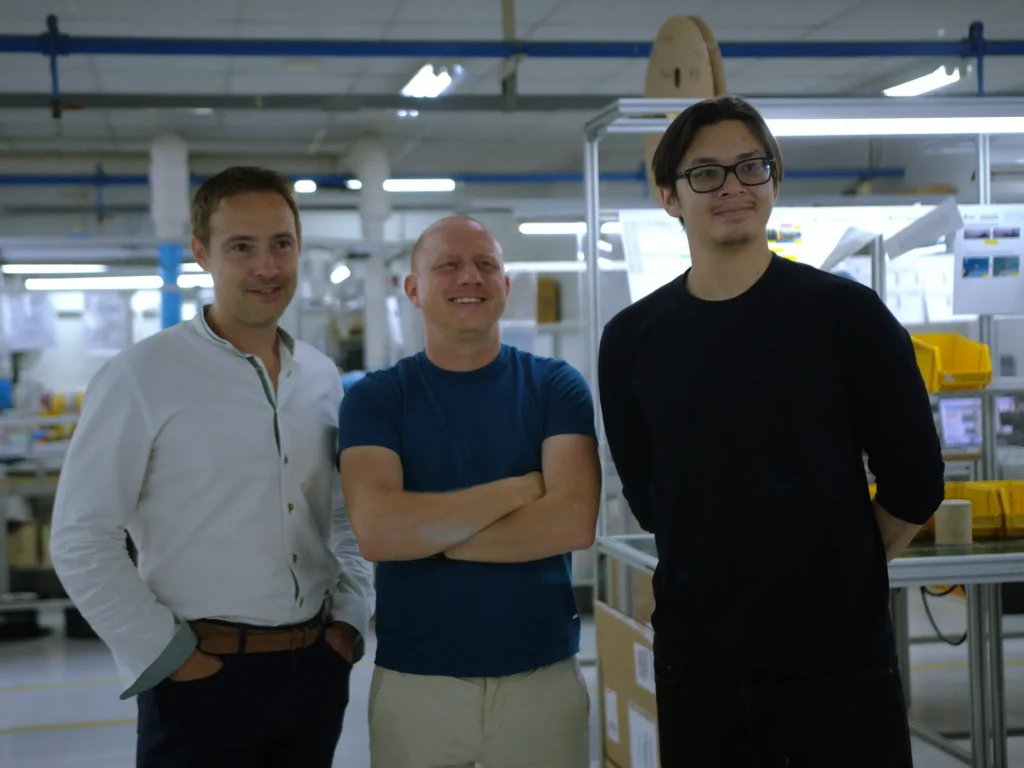
Thailand is not the right answer for every product. But it can be a strong option for selected industrial manufacturing areas where repeatability, manual skill, process control, and quality inspection are important.
At AAE, the main manufacturing areas include cable harness manufacturing, PCB assembly, RFID technology, over and insert molding, and selected OEM manufacturing projects.
These areas are relevant for companies that need more than a transactional supplier. They often require technical coordination, production discipline, inspection routines, and stable long-term communication between customer and manufacturer.
What Buyers Should Prepare Before Evaluating a New Supplier
A supplier evaluation becomes much faster and more useful when the basic technical information is available from the beginning.
Before approaching a new manufacturing partner, OEMs should ideally prepare:
- Product drawings
- Bill of materials
- Technical specifications
- Annual or monthly volume expectations
- Current production process information
- Quality requirements
- Test requirements
- Packaging and labeling requirements
- Target delivery conditions
- Known issues with the current supplier or production setup
This information allows the manufacturing partner to assess the project realistically. It also helps identify whether the product is suitable for a supplier transition, pilot production, or long-term production setup.
If your company already has drawings, specifications, or a BOM available, you can send a first manufacturing inquiry through the AAE RFQ form.
Start With a Low-Risk Evaluation
A responsible supplier transition should not start with a large production move. It should start with a structured first review.
A practical first step can be:
- Share drawings, BOM, or product information
- Review technical and commercial feasibility
- Discuss quality and testing requirements
- Produce samples or a small pilot batch
- Compare results, communication, and process reliability
- Decide whether a larger production transfer makes sense
This approach gives OEMs a clearer view of supplier capability before committing to a larger project.
For companies reviewing alternatives to an existing supplier, AAE also provides a dedicated supplier transition inquiry form.
How AAE Supports Supplier Diversification Projects
AAE supports OEMs and industrial companies that are evaluating Thailand as an alternative or additional manufacturing location.
As a German-led manufacturing and engineering company in Thailand, AAE combines structured industrial execution with commercially attractive production conditions. The company supports customers in cable harness manufacturing, PCB assembly, RFID technology, overmolding, insert molding, and selected OEM assembly projects.
AAE is especially relevant for companies that value clear communication, fast response, structured quality control, and reliable long-term production support.
For industrial buyers, the goal is simple: make supplier evaluation easier, more transparent, and lower risk.
When It Makes Sense to Talk to AAE
A first discussion with AAE may be useful if your company is:
- Reviewing alternative manufacturing locations in Asia
- Looking for a second qualified supplier
- Experiencing quality or communication issues with an existing supplier
- Evaluating Thailand as part of a supplier diversification strategy
- Searching for an OEM manufacturing partner for recurring production
- Planning production for cable harnesses, PCB assemblies, RFID products, molded components, or industrial assemblies
Conclusion
Supplier diversification is not about making a quick move from one country to another. For OEMs and industrial companies, it is about reducing dependency, improving resilience, and building a more stable manufacturing setup.
Thailand can be a practical option for companies in Germany, Europe, the United States, Australia, and other international markets that are looking for an additional manufacturing source in Asia.
If your company is evaluating Thailand as a manufacturing alternative, AAE can support a first technical and commercial review.
Share your drawings, BOM, or current supplier challenge with our team. AAE will help you assess whether Thailand could be a practical option for your production requirements.
Send your RFQ or discuss a supplier transition.
Frequently Asked Questions
What is supplier diversification?
Supplier diversification means building additional qualified supply or manufacturing sources to reduce dependency on a single supplier, country, or production location. For OEMs, this can improve supply chain resilience and reduce operational risk.
Does supplier diversification mean replacing an existing supplier?
Not always. Many companies start by evaluating a second source while keeping the existing supplier active. This allows procurement and engineering teams to compare capability, quality, communication, and cost before making larger decisions.
Why should OEMs consider Thailand for manufacturing?
Thailand can be attractive for OEMs because it has an established industrial base, export experience, competitive manufacturing conditions, and strong relevance in areas such as automotive, electronics, electrical products, and industrial production.
What products can AAE manufacture in Thailand?
AAE focuses on cable harness manufacturing, PCB assembly, RFID readers and transponders, over and insert molding, and selected OEM manufacturing support for industrial customers.
What information is needed for an RFQ?
For a useful RFQ review, buyers should ideally provide drawings, BOM, technical specifications, volume expectations, quality requirements, testing requirements, and any known issues with the current production setup. Project files can be submitted through the AAE RFQ form.
When should a company use the supplier transition form?
The supplier transition form is useful for companies that are reviewing alternatives to a current supplier due to quality issues, delivery delays, communication problems, rising costs, process control issues, capacity limitations, or lack of documentation.
Is AAE suitable for one-off or very small production requests?
AAE is primarily focused on OEMs and industrial customers with recurring production requirements, supplier qualification projects, or serious manufacturing inquiries. The best fit is usually medium- to long-term production rather than one-off or hobby projects.