7 Reasons Products Fail When Scaling From Pilot to Series Production
Why approved products still run into quality, capacity, material, and delivery problems when moving from pilot quantities to recurring series production.
A working product does not automatically mean a production-ready process.
Samples may meet the specification and the design may already be approved. But when a company moves from pilot quantities to recurring series production, weaknesses in documentation, materials, testing, capacity, and process control often become visible.
Here are seven common reasons products struggle when production volumes increase – and what OEMs should address before scaling.
1. Production Documentation Is Incomplete
Drawings, bills of materials, specifications, test requirements, approved samples, and revision levels must remain aligned.
When documentation is incomplete or contradictory, production teams are forced to interpret requirements. This may still work during pilot production, when engineers are closely involved, but it creates significant risk during recurring series production.
Before ramp-up, OEMs should confirm that all relevant production documents reflect the current approved product status.
2. Prototype Processes Cannot Support Series Volumes
Prototype production often depends on experienced individuals, manual adjustments, and direct engineering support.
These methods may produce good samples but become unstable when output increases.
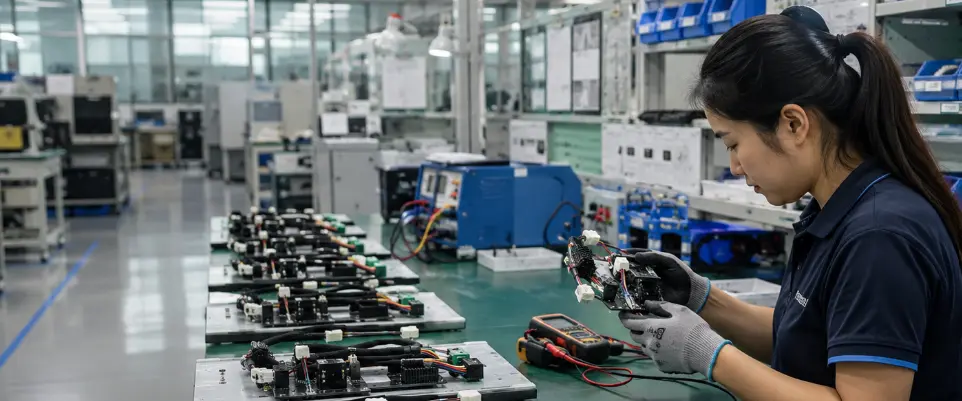
Series production requires clearly defined workflows, repeatable assembly methods, suitable fixtures, controlled inspection points, and production instructions that do not depend on individual knowledge alone.
3. Critical Quality Requirements Are Not Clearly Defined
Not every feature carries the same level of production risk.
Critical dimensions, electrical test results, connector positions, component orientation, sealing requirements, material specifications, and visual acceptance criteria should be identified before ramp-up.
Without clear priorities, inspection may become extensive while still failing to control the characteristics that matter most.
4. Material Supply Cannot Keep Up With Demand
Production capacity does not help when critical materials are unavailable.
Higher volumes can expose long component lead times, single-source dependencies, minimum order quantities, obsolescence risks, and insufficient inventory planning.
A realistic ramp-up plan must therefore align production targets with confirmed material availability and approved component alternatives.
5. Testing and Inspection Do Not Scale
Inspection methods suitable for pilot production may become too slow, subjective, or dependent on individual operators when volumes increase.
Before ramp-up, OEMs should verify whether test equipment, inspection capacity, acceptance criteria, traceability, and nonconformance controls can support the planned output.
Quality control must scale together with production.
AAE supports controlled production through structured production processes and equipment, defined workflows, and final quality control.
6. Capacity Is Calculated Too Optimistically
Theoretical machine output is not the same as dependable delivered capacity.
A realistic capacity review must also include trained personnel, tooling, fixtures, inspection resources, material preparation, packaging, maintenance, expected yield, and possible rework.
Increasing volume without understanding these constraints can quickly lead to quality problems and missed delivery dates.
AAE is structured to support recurring serial supply and scalable production for suitable OEM and industrial projects.
7. Production Volume Increases Before the Process Is Stable
Commercial pressure often leads companies to increase production before all technical and operational issues have been resolved.
The result may include higher defect rates, excessive rework, material shortages, unstable output, delayed shipments, and constant engineering intervention.
A stronger approach is to increase volume through controlled stages and verify quality, output, material availability, and delivery performance before each next step.
A Better Approach to Manufacturing Ramp-Up
A controlled manufacturing ramp-up normally includes:
- Technical and documentation review
- Manufacturing feasibility assessment
- Sample or pilot production
- Process and quality validation
- Resolution of open issues
- Controlled volume increases
- Transition into stable recurring production
The objective is not simply to produce more units.
The objective is to increase output without losing control of quality, delivery, traceability, or production performance.
Planning a Production Ramp-Up?
AAE supports OEM and industrial customers moving from pilot production to stable recurring manufacturing.
Our capabilities include:
- Cable harness manufacturing
- PCB assembly
- RFID readers and transponders
- Over and insert molding
- Integrated OEM manufacturing support
As a German-led manufacturing and engineering company in Thailand, AAE combines structured execution, technical coordination, controlled quality, and a commercially sensible production environment.
For an initial assessment, prepare the available drawings, bill of materials, technical specifications, expected volumes, current production status, and target start of production.
Discuss Your Manufacturing Ramp-Up With AAE
Frequently Asked Questions
What is a manufacturing ramp-up?
A manufacturing ramp-up is the controlled transition from prototype, pilot, or low-volume production to stable recurring series production. The objective is to increase output without losing control of quality, delivery reliability, traceability, or production performance.
Why do production problems often appear during ramp-up?
Higher production volumes place greater pressure on documentation, material availability, process consistency, staffing, inspection capacity, equipment, and communication. Weaknesses that remain manageable during pilot production can become recurring problems during series production.
When should an OEM begin planning a production ramp-up?
Ramp-up planning should begin before the intended start of series production. Projects involving new materials, tooling, supplier qualification, special testing requirements, or significant volume increases may require additional preparation time.
What information is needed for a ramp-up assessment?
For a useful initial assessment, buyers should ideally provide drawings, BOM, technical specifications, expected production volumes, current production status, quality requirements, testing requirements, and the target start of production. Project files can be submitted through the AAE RFQ form.
Can AAE support products that are already in pilot production?
Potentially, yes. AAE can review the available documentation, manufacturing status, expected volumes, quality requirements, testing requirements, and target timeline to determine whether the project fits its manufacturing capabilities.
Can AAE support increasing production volumes?
AAE supports recurring manufacturing and production ramp-ups for suitable OEM and industrial projects. Actual capacity, material availability, timing, tooling, testing, and commercial feasibility must be reviewed individually for each project.
Can AAE support a second-source ramp-up?
Yes, subject to technical and commercial feasibility. A controlled second-source ramp-up may begin with a documentation review, quotation, sample production, pilot batches, and supplier qualification before recurring production volumes are transferred. Companies reviewing alternatives to an existing supplier can also use the supplier transition form.
Which manufacturing capabilities does AAE offer?
AAE focuses on cable harness manufacturing, PCB assembly, RFID readers and transponders, over and insert molding, and selected OEM manufacturing support for industrial customers.
Is AAE suitable for prototypes or very small one-off orders?
AAE is primarily focused on OEMs and industrial customers with credible ramp-up plans, recurring production requirements, supplier qualification projects, or serious manufacturing inquiries. The best fit is usually medium- to long-term production rather than one-off or hobby projects.
How can an OEM start a ramp-up discussion with AAE?
Submit the available drawings, BOM, technical specifications, expected volumes, current production status, and target production date through the AAE RFQ form. This information helps AAE conduct a more useful initial technical and commercial review.